I know very few people who feel they exercise enough. Everyone knows that they should spend more time exercising but very few people do. However if you look at where they put their exercise equipment, it is no wonder they don't exercise. Buying an exercise bike and sticking it in the corner of your basement is going to make it hard for you to want to actually go down and exercise.I think the ideal setup for exercise is to have your exercise equipment tied into your television, so the TV doesn't work unless the exercise equipment is being used. Better yet, if the exercise equipment had a generator on it, so you had to pedal in order to produce the necessary electricity. You can get … [Read more...] about Tuesday’s Tip: Make it Easy to Exercise
Archives for August 2007
Productive Blogging Posts
The last seven weeks we have been doing a series of Productive Blogging. Here are links to each of the posts. How did this go? Was it useful? Should I only stick to non-blogging topics in the future? The Distribution of Inspiration - Understanding how inspiration is distributed is crucial in maintain a regular posting schedule. Pace yourself and don't get discouraged when your mind is blank, but plan ahead when you have plenty of ideas. Make a Top 100 Tips List - This is a simple method to make sure that you always have a ready supply of ideas for creating posts. Create a Series - Creating a series can be a great way to spread out a larger post into smaller bite sized sections of … [Read more...] about Productive Blogging Posts
5 Low Tech Things That Make My Life Easier
I like simple things that save me time or make my life easier. I've compiled a list of 5 simple items I use on a regular basis that make things just a little bit easier. Self inking stamp - It is a simple thing, but having a self inking stamp for signing checks and putting return addresses on envelopes is a huge time saver. They don't have to cost a lot of money, but I would suggest avoiding the ultra cheap ones (less than $10). I started out with the cheapest I could find and it eventually fell apart. My second one was still under $20, but much better constructed. Smart Wallet - I recently replaced my wallet with this money clip. It holds bills and 4 credit cards. I've been very happy … [Read more...] about 5 Low Tech Things That Make My Life Easier
Productive Blogger: Getting Unstuck
Everyone gets stuck. Productive bloggers know how trigger ideas for great new posts. Here are some methods I use for generating new ideas: Skim a Book on Your Topic - An hour in your public library with a pencil and notebook can easily produce enough ideas for several weeks of posts. Use Someone Else's List - Find another list on your topic. Link back to the original to give them credit and add your commentary to the list items you feel are important. This way you use their list as a springboard, but it is primarily your content. Make sure you give them proper credit and are actually adding value. Link Out - Gather a bunch of links to great posts on a particular topic and use them … [Read more...] about Productive Blogger: Getting Unstuck
Productive Space

I am fascinated with the idea of very small, but well designed living spaces. My favorite part of IKEA stores is walking through the small living areas that they have set up and looking at how they used the space so efficiently. I ran across an interesting site where a builder is making very small houses ranging from 40 sq. ft. to 700 sq. ft. While I enjoy large homes, I've found 30 to 40% of most places isn't really used. It would be interesting to live in a place that was designed just around the types of space I needed instead of just matching a standard floor plan. The usefulness of a house is much more related to how well it is designed than its actual floor area. My wife and I … [Read more...] about Productive Space
Tuesday’s Tip: Dry Erase Marker
Dry erase markers are wonderful inventions. Not only can you use them to write on the special dry erase boards, but they also work well on glass. You can use this to leave notes in some pretty interesting places. For example, you can write notes on your bathroom mirror where you will be sure to see it in the morning. The window in your office can also serve as a nice impromptu whiteboard. I have a large desk made from a thick sheet of glass over a frame, so I can use dry erase markers to write directly on my desktop. Obviously, having everything you write in a neat wooden framed whiteboard is less messy and looks more organized, but sometimes doing something out of the ordinary is … [Read more...] about Tuesday’s Tip: Dry Erase Marker
Productive Blogger: One Post Per Week Autopilot
To keep your blog from looking dead, you really should have at least one post per week. Any less and it is difficult for someone to justify coming back again. Since you know you need at least one post per week, why not do these ahead of time. Sit down one weekend and write one post per week for the rest of the year. They need to be well written, but not necessarily long or earth shattering. Pick a Day - Always publish these posts on a particular day. For example at Productivity501, we do a quick tip every Tuesday. This helps people come to expect that at a very minimum they can find new content on that day of the week. Include the Day Name in the Post - Calling your post … [Read more...] about Productive Blogger: One Post Per Week Autopilot
Paperless Office – The Components
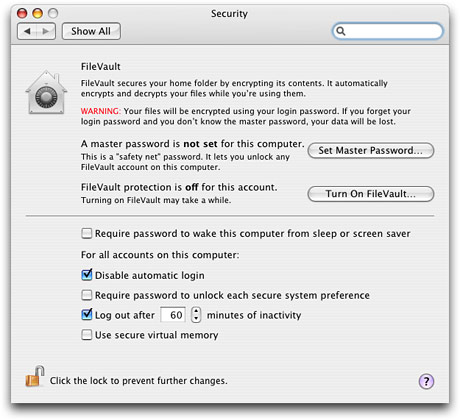
I've been doing a lot of planning as part of my Paperless Office Experiment. The comments on my first post have been very helpful in guiding me in the right direction. If you have any suggestions or experiences, please share them. The biggest portion of my planning has been in trying to identify the components necessary to make a paperless office workable. Simply adding a scanner won't make you paperless. You have to have a system that works together as a whole not just a few random pieces of technology. Here are the components I've identified as being necessary so far. I'd be interested in any input on things I may have overlooked. Scanner Most people start with a scanner when … [Read more...] about Paperless Office – The Components
Setup Your Email to Look Professional

Taking a little time to think about how your email looks from the standpoint of the recipient can go a long ways toward presenting a professional image. Here are eight things you should check to make sure, that when you send an email, it conveys the image you want. Setting Up Your Name to Show up Instead of Your Address - When you send an email, it should show your name in the "from" field. Sometimes people have it set to just show their email address. The worst setup is when it shows something like "NA." This is an example of how your emails should not look to someone else: This is an example of how the" to" field should appear when someone receives your message: Include Your … [Read more...] about Setup Your Email to Look Professional
Paperless Office Experiment
I've talked before about how the paperless office is still a dream. As I look around my desk right now, I have stacks of paper requiring my attention in various places. We are halfway through 2007. Seriously, weren't we supposed to have flying cars and robots to do the dishes and fold the clothes by now? A paperless office seems like it should be normal by now, but it isn't. One of the things that has hindered the adoption of paperless technologies is the fact that they concentrate on the "paperless office" instead of focusing on a "paperless workflow". For example, if I have a paperless office that requires printing out incoming documents, signing them and then scanning them back in … [Read more...] about Paperless Office Experiment
Contest Winner Announced
We've been running an iPod giveaway contest for awhile and we now have a winner to announce. Mr. Chee Wee Ng from the Bet Shop Boy blog, was assigned to the number selected randomly using www.random.org. Thanks to everyone who participated. We'll probably be doing some more giveaways here in the near future. … [Read more...] about Contest Winner Announced
Tuesday’s Tip: Ziplock Bags for Wires
When we were moving down to Mexico in October, I had several miles worth of various cables that I needed to take with me. Network cables, audio cables, USB cables, adapters for various devices, etc. At that point I just had them all thrown into a box and it looked like a huge rats nest. I got to thinking about how it might look to a custom's officer and decided I needed something that looked a little less disorganized. My first idea was to wrap everything up with twist ties, but we didn't have any. So I eventually settled on using Ziplock sandwich bags. It turned out that this worked even better than the ties because it keeps the cables separate so they can't … [Read more...] about Tuesday’s Tip: Ziplock Bags for Wires
Productive Blogger: Starting Slow
One mistake I see new bloggers make is to start off by writing 20 posts all in the first week. Write as much as you can, but don't post all at once. Here is why. When you start of you will not have any readers. If you spread your great posts out over time, you have a better chance of people actually seeing your content. Obviously you can't decide not to post anything until you have a bunch of readers, but unless your posts are time sensitive, don't try to post 5 times a day when you have only 3 people subscribed. A better approach is to post once every two weeks for the first month or so, just to get your blog established and indexed in the search engines. Then start posting every … [Read more...] about Productive Blogger: Starting Slow
Advice for a New Professional

Congratulations to Legal Andrew on completing the bar exam. In this post he asks about advice for a new professional. Below are my thoughts. If you have any further suggestions for Andrew, please add them to the comments here or on his original post. 1. Live Beneath Your Means Your first year as a wage earner will really set the tone for how you spend money. Making a conscious decision to live below your means establishes a habit that will give you flexibility in the future. If you can afford a $1200 apartment, look for ones in the $800 range. When I started out after college, I tried to live on 20% of my income. Later on this gave me a great deal of flexibility that allowed me to … [Read more...] about Advice for a New Professional